Introduction
If you have old coins at home, you must read this article carefully.
I have seen too many ordinary people suffer losses: holding onto Guangxu Yuanbao passed down from ancestors, which are clearly rare and valuable coins, only to be sold to street vendors for a few hundred yuan; some people, in an effort to save time, trust high-priced online buyback offers and end up being scammed for appraisal and service fees; others do not understand preservation and maintenance, ruining coins worth tens of thousands by cleaning them improperly, leading to permanent devaluation.
In the antique coin collecting circle, there is a saying: The value of ancient coins is secondary; the method of selling is the key to making money.
The same Guangxu Yuanbao may be bought by street vendors for only a few thousand yuan; a reasonable transaction in a formal antique market can yield tens of thousands; private dealings with seasoned collectors can fetch hundreds of thousands; and compliant auctions at top auction houses can even exceed a million. The price difference is enormous, far beyond what ordinary people imagine, and the gap is not due to the coin’s condition but rather the selling methods that ordinary people will never know.
Many industry experts and seasoned collectors will never publicly disclose the true logic of selling. They understand that the fewer high-quality ancient coins remain in circulation, the higher the premium for high-end collectibles. Today, I will share insider tips from the antique coin circle without false marketing or exaggeration, breaking down three real transactions of million-level Guangxu Yuanbao from 2024, each with verifiable records and transparent transaction histories.
Additionally, I have compiled expert tips on selling ancient coins, avoidance guides, and market judgment techniques that are rarely shared. After reading this 8000-word article, even if you are a complete novice with just one old coin, you can avoid 99% of the traps and legally sell it at a high price, making at least several thousand more, with rare versions potentially earning you hundreds of thousands! I recommend everyone save and share this article with family members who have copper coins, silver dollars, or ancient coins, so they don’t sell their ancestral treasures at low prices!
I. The Harsh Reality: 90% of Ordinary People Lose Money Selling Ancient Coins
Before discussing high-priced cases, I must speak the truth.
According to statistics from the national coin trading industry in 2024, over 8 million ancient coins, silver dollars, and copper coins flow out of the market each year, with 72% of ordinary people selling ancient coins at prices more than 50% below market value; 18% are scammed by intermediaries or false platforms for service and appraisal fees; and less than 10% find the right channels and techniques to sell their ancient coins at reasonable market prices.
Why do people with treasures fail to make money? I have summarized the four most fatal misconceptions ordinary people have when selling ancient coins, each hitting a painful point. Let’s see if you have fallen into these traps.
1. Not Understanding the Market and Blindly Trusting Street Vendor Quotes
Street vendors can be seen everywhere, riding electric bikes and carrying small bags, claiming to buy silver dollars and ancient coins at high prices. The underlying logic of these vendors is not to offer market prices but to extremely undercut and hoard at low prices. They know that ordinary people do not understand the types and conditions of coins, often quoting 3000-8000 yuan for a Guangxu Yuanbao worth over 100,000 yuan, exploiting the psychology of people eager to cash in and unaware of the market.
2. Recklessly Cleaning and Destroying the Original Condition of Ancient Coins
This is the most regrettable and irreparable loss. Many people see their ancient coins tarnished, rusted, or dirty and think they look bad, so they scrub them repeatedly with steel wool, toothpaste, vinegar, or disinfectant. Industry insiders know that the natural patina of ancient coins is their soul; the original state is the highest value. Artificial cleaning and polishing can damage the coin’s surface oxidation layer and scratch the base texture, leading to an 80% devaluation of even a million-level unique piece, reducing it to mere currency.
3. Believing in High-Priced Online Ads and Paying Large False Fees
On short video and news platforms, one can see ads everywhere claiming “Ancient coins worth millions, free appraisals, quick transactions.” Countless unscrupulous intermediaries and fake auction companies exploit the psychology of ordinary people wanting to get rich overnight, falsely advertising sky-high prices to lure collectors, then charging appraisal fees, packaging fees, custody fees, and unsold fees, ranging from hundreds to thousands. In the end, the ancient coins cannot be sold, and the fees are non-refundable, essentially a pure collection of the ordinary person’s intelligence tax.
4. Choosing the Wrong Trading Channel and Missing the Best Premium Opportunities
Ordinary coins are suitable for offline transactions at physical stores, while rare versions should be graded and listed, and top-tier samples or unique pieces must go through formal auction houses. Many people do not differentiate between types and conditions, selling casually to acquaintances or small shops, leading to rare ancient coins not getting exposure or competitive bidding, thus failing to sell at the expected high price. Choosing the wrong channel directly results in missing out on tens of thousands in premiums.
After reviewing these four misconceptions, everyone must be alert. There is no luck in the ancient coin collecting industry; understanding techniques, choosing channels, and avoiding traps are the core secrets to making more money. Next, I will detail three real transactions of million-level Guangxu Yuanbao from 2024, each with clear transaction times, prices, and characteristics, easy to understand, allowing everyone to compare and check their own coins.
II. Three Real Transactions of Million-Level Guangxu Yuanbao for Self-Verification
(I) First Coin: 1896 Fujian Official Mint Guangxu Yuanbao, Sold for 1.93 Million Yuan | Trial Mint Sample, Extremely Rare
1. Real Transaction Record
Transaction Time: November 20, 2024, 9:30 AM
Transaction Location: Southern High-End Coin Spring Auction
Final Hammer Price: 1.93 million yuan (excluding commission)
Collection Grade: China Silver Coin Twenty Rarities, Grade One Trial Mint Sample
2. Detailed Appearance Features of the Coin (Recommended to Screenshot for Comparison)
This silver coin is fully named: 1896 Fujian Official Mint Guangxu Yuanbao Keping 1 Qian 4 Fen 4 Li Silver Coin, small and exquisite in size, with meticulous and precise minting, representing a significant trial mint coin from the late Qing Dynasty’s Self-Strengthening Movement.
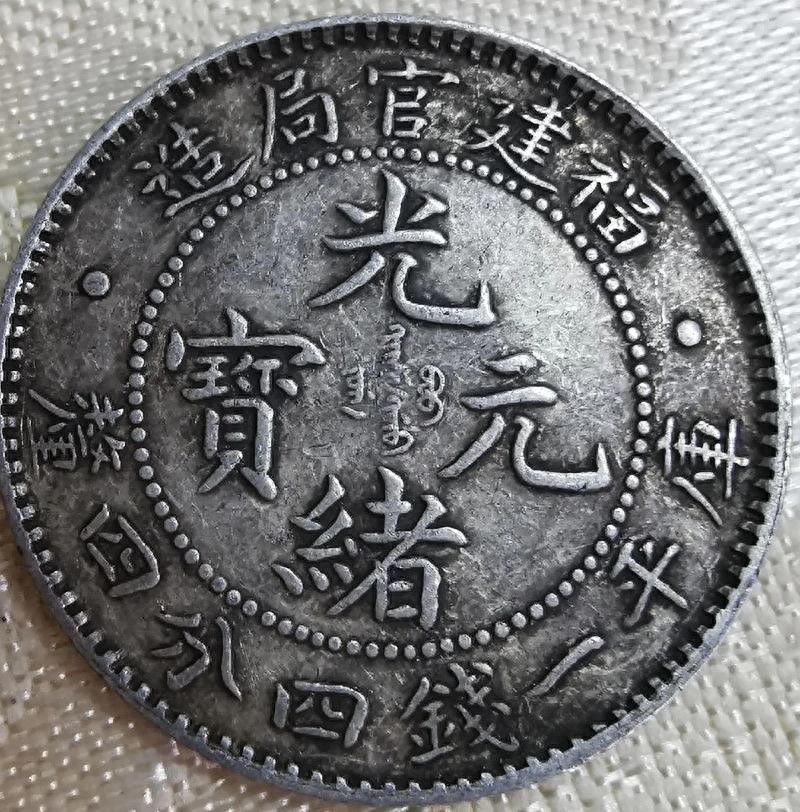
Front Details: The coin has a neat and rounded bead circle, with Chinese and Manchu characters engraved inside reading “Guangxu Yuanbao,” with clear and strong strokes; above the bead circle, it is inscribed with “Fujian Official Mint,” with symmetrical and aesthetically pleasing typography; below the bead circle, the coin value “Keping 1 Qian 4 Fen 4 Li” is noted; floral patterns on both sides are delicately carved with exquisite lines and no blurry breaks.
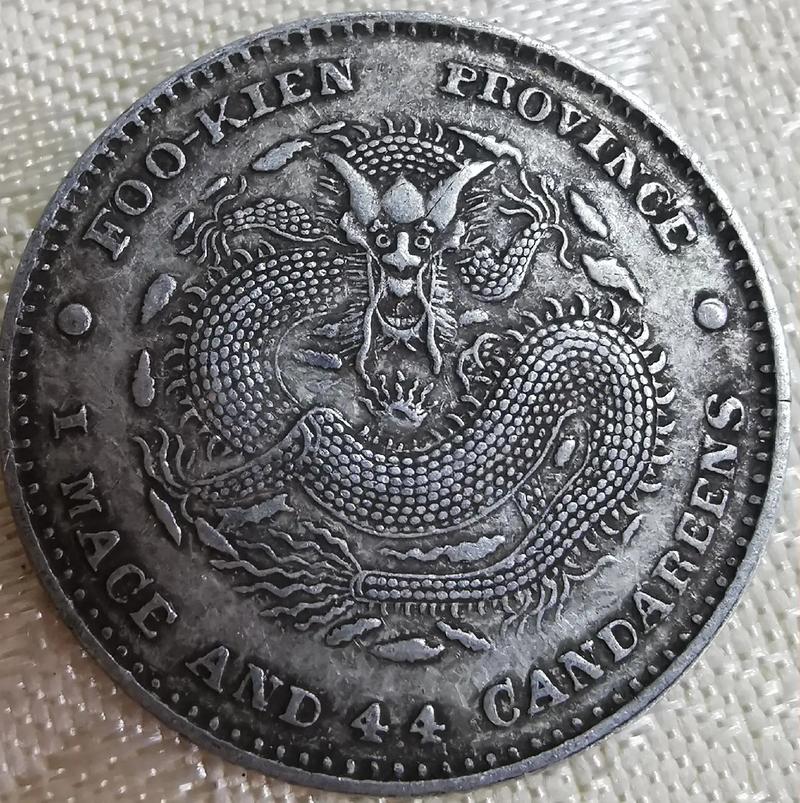
Back Details: The center features a coiled dragon pattern, with a strong body, fine scales, and sharp claws, exhibiting strong three-dimensional lines, typical of the late Qing official coiled dragon style; the outer circle is surrounded by English denomination and origin markings, complemented by small floral decorations, showcasing a blend of Chinese and Western craftsmanship with a strong sense of design; the coin’s base is smooth and flat, with no minting sand holes or stamping defects.
3. Historical Background: A Short-Lived Mint Creating an Unparalleled Rarity
Many wonder why this small 1 Qian 4 Fen silver coin can sell for nearly 2 million. The core reason is its extremely short minting time and very few surviving pieces.
In 1896, local gentry in Fujian jointly established a mint, which was a new-style minting institution independently trialed during the late Qing Dynasty. In its early days, the mint completely imitated the coin styles of the Guangdong Mint, producing this small silver coin as a trial. Due to immature technology, funding shortages, and policy changes, the mint was forced to close in October of the same year, operating for only a few months from establishment to destruction.
The short production cycle, combined with a large number of coins being melted down later, means that very few trial coins remain in circulation. Currently, the number of complete pieces that can be traced is less than 15, with only 3 pieces reaching the original uncirculated grade, making it one of the most scarce coins in the South China silver dollar category.
4. Expert Selling Tips (Must-Know for Trial Mint Coins)
Experts in the collecting circle clearly remind: Never sell official trial mint samples or rare coins from short-lived mints to street vendors or ordinary antique shops.
These coins are not aimed at ordinary individuals but rather seasoned collectors, coin collecting institutions, or museum preparatory teams. Ordinary shops lack high-end clientele and can only offer high prices for common currency, even if they recognize the rarity, they will deliberately undercut prices.
Correct Selling Method: Prioritize choosing a formal auction house with cultural relic auction qualifications and follow the specialized coin auction process; secondly, connect with seasoned private collectors for one-on-one precise transactions. These two methods can earn at least 500,000 more compared to street buybacks, and for top-grade trial mint coins, the premium space can even double.
(II) Second Coin: 1908 Yunnan Province Guangxu Yuanbao, Sold for 2 Million Yuan | Original Version, Authentic
1. Real Transaction Record
Transaction Time: June 22, 2024, 1:30 PM
Transaction Location: Southwest Antique Coin Summer Auction
Final Hammer Price: 2 million yuan (excluding commission)
Collection Grade: Yunnan Old Dragon Original Version, Local Silver Dollar Boutique
2. Detailed Appearance Features of the Coin (Easy for Beginners to Identify)
This silver coin is fully named: 1908 Yunnan Province Guangxu Yuanbao Keping 7 Qian 2 Fen Silver Coin, belonging to the early old version of Yunnan’s Long Yang, commonly known as “Yunnan Old Dragon,” distinguished from later thin and light revised versions of the new dragon silver dollar, with a vastly different collectible value.
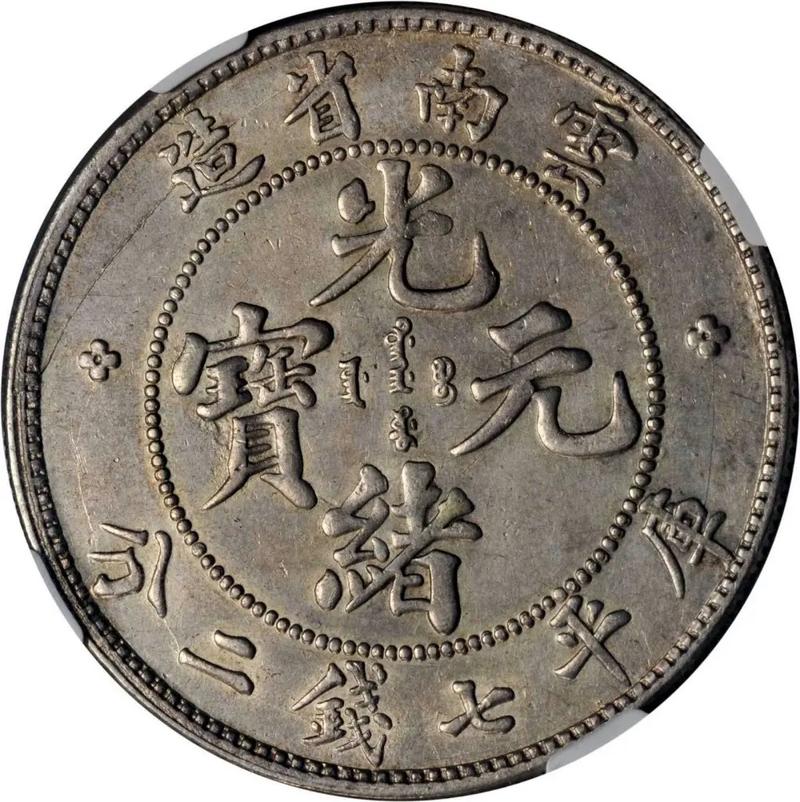
Front Details: The top of the coin is engraved with the neat regular script “Yunnan Province,” with a solid and majestic font; the bottom reads the coin value “Keping 7 Qian 2 Fen,” with uniform stroke thickness; the center features both Manchu and Chinese characters reading “Guangxu Yuanbao,” with symmetrical and neat layout; standard cross star patterns are paired on both sides, aesthetically pleasing and unique to the old version of Yunnan Long Yang.
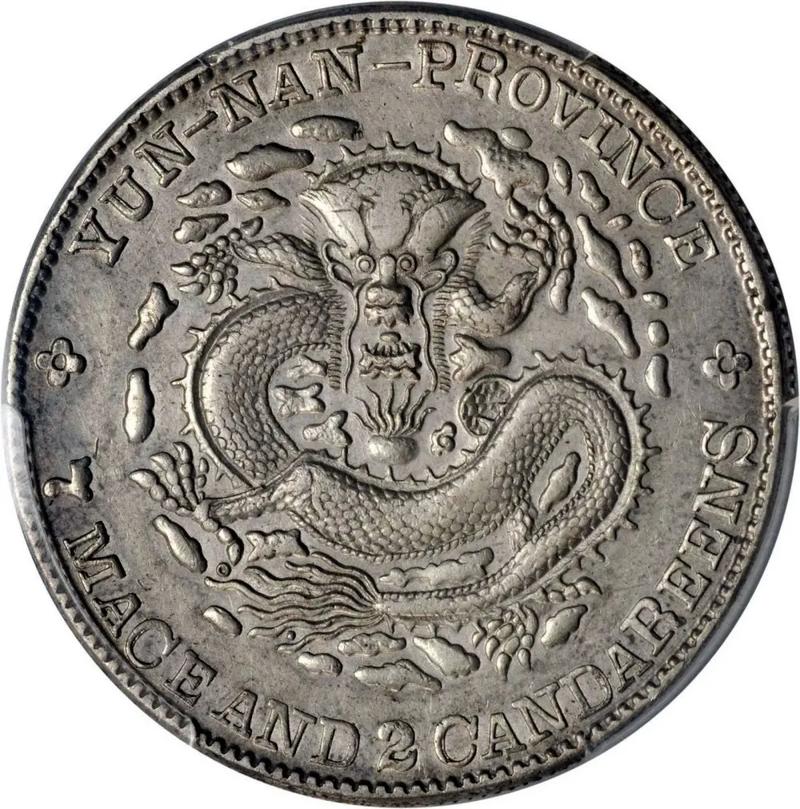
Back Details: The back features a coiled dragon totem, with a robust body, full scales, and lively eyes, exhibiting strong pressure uniformity and three-dimensionality; the outer ring is engraved with English, indicating the minting province and coin value, with cross stars echoing the front; the coin’s surface has a natural oxidation patina, with no artificial aging or post-repair traces.
3. Rarity Reason: Imported Machines for Coin Minting, Decreasing Surviving Quantity
In 1908, the Yunnan Silver Dollar Bureau completed equipment upgrades, importing German-made minting machines and using original molds issued by the central government to mint silver dollars. This old version of the Yunnan Province Guangxu Yuanbao was among the first batch minted after the upgrade, featuring excellent craftsmanship, pure materials, and meeting silver content standards.
Later, due to tight military spending and shortages of raw silver materials, the mint reduced minting costs and began producing thin and inferior new dragon silver dollars. The old version gradually ceased minting, and due to the humid climate in Southwest China, silver dollars suffered severe oxidation and corrosion, making it extremely difficult to retain complete pieces. Currently, the market circulation of unblemished, unmodified, and uncleaned original old dragon coins is less than 100 pieces.
4. Expert Private Selling Tips: Grading and Packaging to Avoid Undercutting
Many people have Yunnan Long Yang, which are clearly old version boutiques, yet buyers maliciously undercut prices by claiming “poor condition, tarnished patina, slight wear.” The simplest way to avoid undercutting and sell at a high price is to obtain authoritative grading and packaging in advance.
PCGS and NGC are recognized grading institutions that will professionally score the coin’s material, type, condition, and rarity, issuing official appraisal certificates. Coins that are graded and packaged clearly show authenticity and condition, making it impossible for buyers to arbitrarily nitpick and undercut prices. Under the same condition, graded coins can command a premium of 30%-60% over ungraded coins; an ordinary old version of Yunnan Long Yang can earn at least tens of thousands more after grading, with top-grade pieces potentially doubling in profit.
(III) Third Coin: 1898 Wuxu Jiangnan Province Guangxu Yuanbao, Sold for 2.13 Million Yuan | Pearl Dragon Unique Piece, Rich Historical Significance
1. Real Transaction Record
Transaction Time: December 15, 2024, 9:30 AM
Transaction Location: East China Antique Coin Year-End Auction
Final Hammer Price: 2.13 million yuan (excluding commission)
Collection Grade: Jiangnan Province Rare Commemorative Coin, Pearl Dragon Top-Grade Condition
2. Detailed Parameters and Appearance Features of the Coin
This silver coin is fully named: 1898 Wuxu Jiangnan Province Guangxu Yuanbao Keping 7 Qian 2 Fen Silver Coin, belonging to the rare commemorative dragon silver dollar of the late Qing Dynasty, and is one of the most well-known and highly priced collectibles in the Jiangnan silver dollar series.
Precise Parameters: The coin’s standard weight is 26.66g, diameter 39.5mm, with uniform thickness and regular shape, fully compliant with the late Qing official silver dollar minting standards.
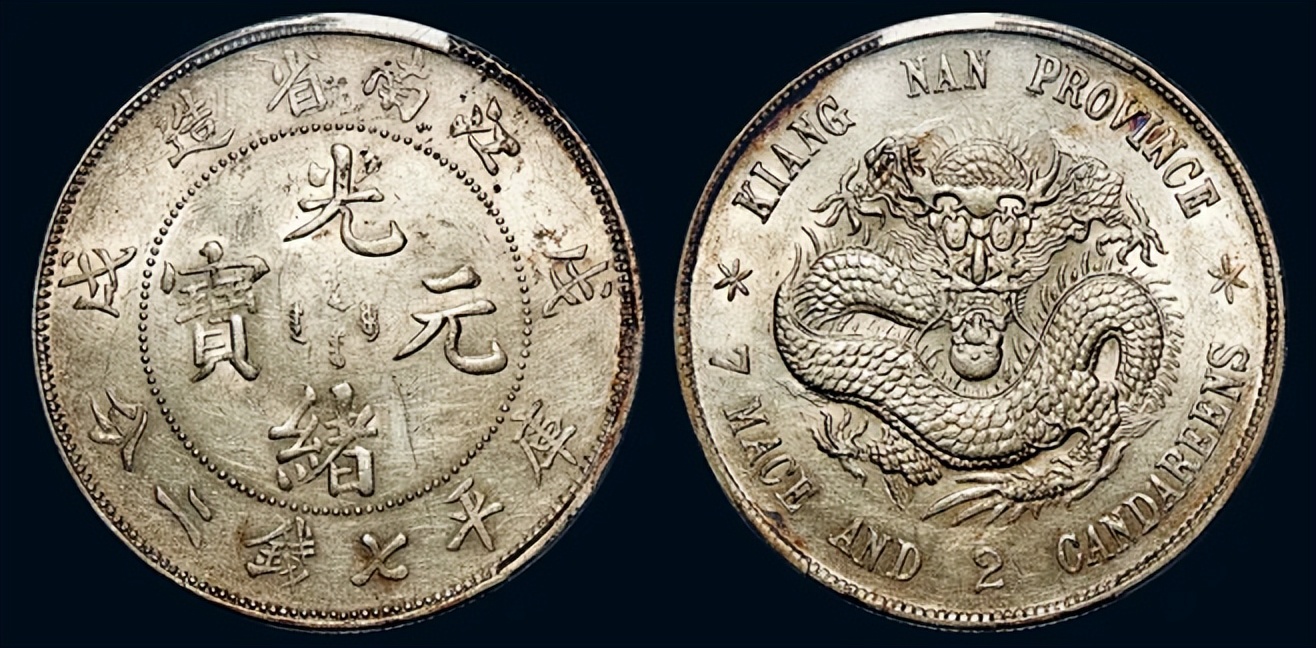
Front Details: The bead circle is engraved with Manchu and Chinese characters “Guangxu Yuanbao,” with elegant and exquisite font and fine carving; the outer upper part of the bead circle is engraved with “Jiangnan Province,” and the lower part indicates the coin value “Keping 7 Qian 2 Fen”; the sides are marked with “Wuxu,” clearly indicating the year of minting, 1898; unique six-flower star patterns are paired on both ends, highly recognizable.
Back Details: The back features the top-grade rare Pearl Dragon design, with smooth and full scales arranged neatly, resembling pearls embedded in the dragon’s body, which is the origin of the name Pearl Dragon; the dragon’s body pattern is clear, and the base is finely smooth, with a beautiful patina formed by a century of natural oxidation, reaching top-level collectible standards.
3. Historical Rarity: The Disappeared Jiangnan Province, Unique Commemorative Silver Dollar
Those who understand history and collecting know that Jiangnan Province is a disappeared province.
During the Qing Dynasty, Jiangnan Province’s jurisdiction included large areas of present-day Jiangsu, Anhui, and Shanghai. Later administrative divisions led to the official abolition of Jiangnan Province. When minting Jiangnan Province silver dollars, the mint continued to use the Jiangnan Province name to preserve historical memory, despite the province no longer existing.
The minting cycle for the Wuxu year was short, and due to frequent wars and severe coin damage, the circulation of this Pearl Dragon commemorative coin is extremely low. Additionally, the complex engraving process for the Pearl Dragon and rapid mold wear lead to a high defect rate, making perfect pieces extremely rare. The unique historical background, exquisite minting craftsmanship, and scarce surviving quantity make this coin a hard currency sought after in the collecting circle.
4. Advanced Selling Tips: Connect with Private Collectors to Bypass Layered Intermediary Exploitation
For top-tier rare coins like the Jiangnan Province Pearl Dragon, signature versions, and trial mint versions, it is most taboo to go through multiple intermediaries.
Ordinary intermediaries and antique middlemen will take a commission at each layer, with the highest taking 20%-30% of the transaction price. A coin that could sell for 2 million may shrink by tens of thousands after passing through intermediaries.
Industry experts suggest the best approach: prioritize connecting with seasoned private collectors to bypass all intermediaries for direct one-on-one transactions. High-end collectors focus on the quality and heritage of the collection and will not maliciously undercut prices; the transaction process is simple, and costs are transparent, with no extra fees. Choosing the right trading demographic can easily earn tens of thousands more for a rare coin, potentially even over a million.
III. In-Depth Analysis of Guangxu Yuanbao Market Trends in 2025: Why Have Ancient Coins Skyrocketed in Price?
After reviewing the three million-level transaction cases, many fans wonder: why were Guangxu Yuanbao previously overlooked, and why have prices soared in the past two years? Is it market speculation or a return to value? I will break down the underlying logic of price increases based on the latest data from the coin industry in 2025, making it easy to understand for everyone.
1. Non-Renewable Resource, Surviving Quantity Decreasing Year by Year
During the late Qing and Republican periods, a massive number of silver and copper coins were issued domestically, but after a century of wars, large-scale recovery and melting during the founding period, and losses and damages, the number of complete ancient coins remaining continues to decrease. Especially for official original versions, special commemorative coins, and trial mint samples, the minting volume was already low, making them non-renewable historical artifacts—each coin lost is one less. Scarcity is always the core logic behind price increases; the less there is, the higher the premium.
2. Explosive Growth in Collectors, Market Supply Unable to Meet Demand
In recent years, the popularity of collecting culture in China has significantly increased, with ancient coins having a low entry threshold and strong value retention, making them the preferred collectible for ordinary people. Currently, the number of coin collecting enthusiasts nationwide has surpassed 30 million, with over 2 million new players entering each year. Entry-level players prefer ordinary currency, while seasoned collectors compete for rare versions, leading to a significant influx of funds into the market, causing prices for ancient coins to naturally rise.
3. International Market Recognition, Overseas Funds Pouring In
Today, Chinese ancient coins are no longer limited to domestic transactions; they are highly recognized in Southeast Asia, the Middle East, and Europe and America. Overseas Chinese consortiums and foreign seasoned collectors are purchasing large quantities of Qing Dynasty Long Yang and Republican silver dollars, with high-end ancient coins consistently in short supply. In the spring 2025 overseas auction, an ordinary Jiangnan Province Jiachen Long Yang sold for 25% higher than in the domestic market, and overseas funding further elevated domestic market conditions.
4. Market Standardization, Reduced Transaction Risks and Increased Transparency
In the past, the ancient coin market was rife with counterfeits and traps, making ordinary people hesitant to invest. Now, with a mature grading and appraisal system, authoritative institutions strictly control authenticity, drastically reducing the circulation of counterfeits. Additionally, online trading platforms and formal auction houses have improved oversight, ensuring transparent and compliant transaction processes, allowing more stable investors to view ancient coins as valuable assets, driving prices higher.
IV. A Must-Read for Ordinary People: Classification of Guangxu Yuanbao Levels, Check Your Coins to Avoid Mistakes
I must remind everyone again: Not all Guangxu Yuanbao can sell for millions.
The three high-priced coins mentioned above are at the top of the coin pyramid, accounting for less than 0.3% of the vast number of Guangxu Yuanbao. To avoid blind fantasies and being misled by unscrupulous merchants, I have classified the value levels of Guangxu Yuanbao based on the latest market recovery and auction prices for 2025, allowing even beginners to quickly self-check.
1. Common Currency Level: Ordinary Circulating Guangxu Yuanbao (800-6000 Yuan)
These are the most common types found in ordinary households, with no special commemorative years, rare versions, or trial mint markings. Common versions include ordinary Jiangnan Jiachen, Hubei 7 Qian 2 Fen, Beiyang 34-year currency, and Yunnan New Dragon, etc. The coin surfaces show normal circulation wear and natural oxidation, with no repairs, cleaning, or severe damage. 2025 market conditions: ordinary currency 800-2500 yuan, well-preserved beautiful pieces 3000-6000 yuan. Suitable for casual handling and short-term cashing, stable value retention, with no explosive premiums.
2. Mid-High-End Boutique Level: Special Versions, Rare Commemoratives (30,000-300,000 Yuan)
Guangxu Yuanbao with special years, unique patterns, and niche versions have a relatively low surviving quantity and high recognition. Common versions include rare commemorative Jiangnan Long Yang from Wuxu, Jihai, Gengzi, Xinchou, and Renyin years; Beiyang 25th, 26th, 29th years; small denomination trial mint coins from Fujian, Zhejiang, and Anhui. Well-preserved, unprocessed naked coins generally sell for 30,000-150,000 yuan; high-grade graded beautiful pieces can reach 200,000-300,000 yuan, making them key targets for mid-level collectors.
3. Top-Level Unique Piece Level: Trial Mint, Sample Coins, Special Dragon Patterns (500,000-3,000,000 Yuan)
This includes the high-priced coins mentioned in the article, comprising official trial mint coins, rare coins from short-lived mints, special dragon patterns (Pearl Dragon, Short Beard Dragon, Long Beard Dragon), and uncirculated original coins. These coins are not intended for circulation, with extremely low minting quantities and only a handful remaining. They primarily circulate in high-end auction houses and private transactions, with buyers often being consortiums or seasoned collectors, easily surpassing a million in transaction prices, representing the pinnacle of ancient coin collecting.
V. Expert Insider Tips: Five Selling Techniques for Ancient Coins That Ordinary People Can Directly Apply to Earn Tens of Thousands More
Having worked in the coin industry for many years and visited over a hundred seasoned collectors and auction house appraisers, I have compiled five industry secrets that are never shared, which ordinary people can directly apply. No complex jargon, easy to understand, and can help everyone legally and compliantly sell ancient coins at the highest price.
1. Preservation Principle: Original Condition, Never Artificially Treated
The most valuable aspect of all old coins is the patina formed naturally over a century. Darkening, yellowing, and slight rust are normal; never use any tools to clean, polish, or buff. Coins that have been artificially treated, regardless of their rare materials, will see their market value halved. The correct preservation method is to place them in sealed moisture-proof bags, store them in a dry, dark place, and avoid frequent handling; maintaining the original state is the highest value.
2. Value-Adding Techniques: Light Maintenance, Reject Violent Repairs
If the coin surface has stubborn dust or slight surface rust, do not scrub violently. Use a soft wool brush to gently sweep away surface dust and place it in a dry, ventilated area for natural maintenance. Avoid using chemical agents, vinegar, or disinfectants, as once the coin surface is corroded, it cannot be repaired permanently. Proper maintenance can raise the market premium of an ordinary ancient coin by 20%.
3. Tiered Trading Channels: Different Coins, Different Selling Methods
Ordinary currency (within 10,000 yuan): Directly trade in person at formal antique markets or physical stores, cash settlement, no fees, and the fastest cashing;
Mid-high-end boutiques (30,000-300,000 yuan): Send to authoritative grading institutions for packaging, list on formal coin trading platforms for higher premiums;
Top-tier rare coins (over 500,000 yuan): Connect with compliant auction houses or seasoned private collectors for public bidding to maximize transaction prices.
4. Core Avoidance: Do Not Pay Any Upfront Fees
Remember one iron rule: In formal transactions and auctions, there are no fees before the deal is made. Any platform or intermediary that charges upfront fees for appraisal, packaging, custody, or filing is 100% a scam. Do not trust sky-high verbal quotes; without a written contract guaranteeing the transaction and funds, refuse all offers.
5. Timing for Cashing In: These Two Time Periods Each Year Yield the Highest Prices
The coin industry has fixed price cycles, with April to June and November to December being peak auction seasons when collectors have ample funds and market demand is high, leading to the highest transaction premiums. Try to avoid selling before and after the Spring Festival and during the summer off-season when market liquidity is poor and price suppression is common; the price difference for coins of the same condition can reach up to 40% between peak and off-peak seasons.
VI. A Message for Ordinary Collectors: The Most Expensive Ancient Coins Are Never Just About Price
After detailing the three million-level Guangxu Yuanbao cases and the complete selling tips, I want to share a few heartfelt words with all ordinary people.
An ancient silver or copper coin, having traversed a century of wind and frost, surviving from the tumultuous late Qing period, passing through countless hands, eventually landing in the boxes, drawers, or wooden boxes of ordinary folk. It is not just a collectible but a witness to history, a cherished memory passed down from ancestors.
The Fujian official trial mint coin witnessed the rise and fall of the late Qing Self-Strengthening Movement; the Yunnan old dragon silver dollar recorded the beginnings of coin manufacturing in the southwestern frontier; the Jiangnan Pearl Dragon silver dollar inscribed the historical mark of a vanished province. Every line, every pattern, every patina is an irreplaceable trace of the era.
Now many people blindly rummage through their belongings, fervently pursuing million-dollar prices, obsessed with getting rich overnight. I advise everyone to maintain a calm mindset, not to be overly enthusiastic, and not to sell carelessly at low prices. The ancient coins preserved at home can fetch high prices as a surprise gift from the times; securely holding onto them is a warm legacy unique to each family.
The essence of collecting is never about speculation and getting rich quickly, but about respecting history and cherishing heritage. Understanding protection, learning to identify, and finding the right channels without greed, blind faith, or falling into traps is the best state for ordinary people in collecting.
Comments
Discussion is powered by Giscus (GitHub Discussions). Add
repo,repoID,category, andcategoryIDunder[params.comments.giscus]inhugo.tomlusing the values from the Giscus setup tool.